Over the years, I've told colleagues and friends about things I have seen or experienced. Many times, people have said that I should write them down so that they won't be lost and forgotten, since some of them might be useful parts of our history. I've been writing them down, without being sure what I would do with them. I decided to gradually post them on this website, and see what reactions I get. I suggest reading from the bottom up (starting with the August 2017 post "The Meritocracy"). Thoughtful and kind feedback would be useful for me, and would help me to revise the exposition to make it as useful as possible. I hope that while you read my stories you will ask yourself "What can I learn from this?" I'm particularly interested in knowing what you see as the point of the story, or what you take away from it. Please send feedback to asilverb@gmail.com. Thanks for taking the time to read and hopefully reflect on them!

I often run the stories past the people I mention, even when they are anonymized, to get their feedback and give them a chance to correct the record or ask for changes. When they tell me they're happy to be named, I sometimes do so. When I give letters as pseudonyms, there is no correlation between those letters and the names of the real people.

Thursday, June 17, 2021

Lesson from my father

 I was perhaps 9 or 10 years old when I told my father that I was due for a raise in my weekly allowance, from 15 cents to 25 cents. (Yes, this either dates me, or says something about our socioeconomic status, or both.)

I explained to him that 25 cents was the going rate.

"How do you know that?" he asked.

"All my friends are getting 25 cents," I replied.

"Who, for example?"

"Suzy next door."

"How do you know that Suzy next door is getting 25 cents?" he asked.

"She told me."

"So all you know is that Suzy told you she's getting 25 cents. You don't know that she's getting 25 cents. For all you know, she's telling her parents that she wants a raise since you're getting 25 cents."

"Are you saying my friends are lying?" A weak and angry retort, but it was the best I could do. I had already lost. I think we compromised at 20 cents.

It's true that my training as a mathematician, especially at math summer camp when I was in high school, helps me distinguish true from false, and true from "someone told me it was true". So I'm continually surprised when I see mathematicians fall for false "proofs" or fake news. But then I remember that I had the additional benefit of learning from a father who was a newspaper reporter back in the day when journalism was supposed to be about facts, not opinion.

Friday, June 11, 2021

My Superpower, Part 4

I was sitting in the Common Room of the Princeton math department, reading a journal article and minding my own business. A few other grad students were hanging around. A fellow student, whom I'll call C, bounded in and announced to his friends that he had found a major flaw in an important and influential work by a famous Princeton professor, in a paper that had been published many years earier in the Annals of Mathematics.

They heartily congratulated him, gleefully discussed how famous this would make C, and suggested ways to celebrate.

I looked up. From my prior experience with C, I thought it extremely unlikely that he had found a major mistake in a high-profile paper that had been around for awhile and had been subject to extensive scrutiny.

My father was a journalist, and he had trained me from a young age in critical thinking skills. He taught me that I shouldn't believe that something is true just because someone said it was true. Be skeptical. Though it took me awhile to learn to be skeptical of famous professors, I was quite ready to be skeptical of C.

I asked to see the paper, and I asked C to point to the mistake. It was near the beginning. I read the line in question, and realized that C had thought that (a+b)2 was a2ab + b2, rather than the correct a2 + 2ab + b2.

I took C aside and gently discussed it with him. He agreed that it was his mistake, not the famous professor's. I was pleased that I had succeeded in telling him in a way that allowed him to save face with his friends. I don't always manage to do that.

So what is my superpower? Bullshit detection.

Wednesday, June 9, 2021

My Superpower, Part 3

Back at math camp as a counselor, some of the other counselors were standing around our kitchen after dinner, trying to prove a certain result about finite groups. Buoyed by my success in the group theory course a few years earlier, I tried to join them. After they went down a dead end, I suggested that we try to prove or disprove it for some concrete examples. My fellow counselors disdained that approach, which would have gotten their hands dirty with computation. They preferred to go straight for the loftier goal of proving it in general.

I loved group theory, I enjoyed getting to know individual finite groups of small order, and I thought of them as my friends. Seeing where the difficulties were likely to be, I played around with groups of order 24 and 36.

Eventually I showed the other counselors a counterexample to what they were trying to prove. I was pleased that I had learned from Loomis how illuminating a counterexample can be. But for my friends, a counterexample made the problem uninteresting, and they turned up their noses and went on to something else. (Would they have been more grateful for my counterexample had I been someone they respected more? I don't know.)

Monday, June 7, 2021

My Superpower, Part 2

After class, a fellow student whom I'll call M brought Professor Loomis a proof that M knew was incorrect. A group of us students gathered round to help Loomis find the flaw in the proof. Every step was intuitively correct, but it led to an incorrect conclusion. How intriguing! Did this reveal a fundamental flaw in the fabric of the universe? Of course not. But what was wrong with M's proof?

There were a dozen or so simple steps, and for each one, I knew an airtight justification for why it was true. Each one, except for one that clearly had the ring of truth.

I pointed to that step and said "I don't understand why this is true." The other students chimed in to explain it to me. (Some people now call this "mansplaining".)

Loomis exclaimed, "That's it! She's got it!" I felt like Eliza Doolittle with Henry Higgins, and wondered if we should burst into song. I fell head over heels in love with him.

Loomis gave us a counterexample for that step. I wish I had thought to do that! I hadn't thought any further ahead than "I don't understand why this is true."

Saturday, June 5, 2021

My Superpower

This begins a series of vignettes on the same theme.

Part 1:

I stared at the test question. The test was in a group theory course I was taking at a math summer camp for talented high school students. We were asked to prove that a certain statement was true. I struggled with the problem for awhile, and finally wrote in the answer space, "I must have a fundamental misunderstanding of group theory, because it seems to me that ..." and I went on to explain how I concluded something that was in direct contradiction to what we had been asked to prove.

After the test, the students gathered around to discuss it. My friends had all come up with proofs for that question. No one else seemed to have a fundamental misunderstanding of group theory, the way I had. I sighed.

That test question shook my self-confidence. I thought I knew right from wrong, at least in mathematics. That was the beauty of math; you know whether you're right. I had thought I was good at it. Clearly, I was wrong. How depressing.

I was awed by the brilliance of the top students. Many of the best ones had impressive backgrounds---they had highly educated parents, went to unusually good high schools, and had already taken courses at universities. I wasn't in their league. I managed to do well on some of the tests by doing well on the problems they looked down on and didn't bother with, namely the routine ones that required very fast and accurate computation by hand. I was great at those (but that wasn't my superpower).

One of the counselors told me, "Congratulations! You're the only one who aced the test." I didn't know what "aced" meant, and I was too embarrassed to ask. When the professor handed back the graded tests, I had a score of 20 points. That seemed odd. Twenty points was the maximum. Why hadn't he subtracted points for my fundamental error in understanding?

The professor pointed out to the class that he had made a mistake, and accidentally asked us to prove something that wasn't true. I was the only one who realized it. Those who gave an incorrect proof had one point taken off.

I felt bad about getting credit for realizing the problem was wrong, since I had realized no such thing. It hadn't occurred to me that such an intelligent professor could make a mistake. I only thought that I must be stupid.

While I wondered if it was fair for my fellow students to lose a point due to the professor's mistake, I was happy to be the only one who aced the test. And I was amazed that such smart students could write incorrect proofs and not realize they were flawed.

Sunday, May 30, 2021

A Most Ingenious Proof

Professor Q was teaching group theory to undergrads. One day, while handing back homework, as he was about to hand me mine, Professor Q excitedly announced to the class that Alice's homework contained "the most ingenious incorrect double induction proof I've ever seen."

I froze in my seat, and stopped listening. All I could hear was the word "incorrect", reverberating in my head. I might not be as inventive or creative as the next mathematician, but I prided myself on getting it right. For me, submitting an incorrect proof was one of the worst sins a mathematician could commit.

Professor Q briefly explained the proof to the class, but I was so stunned by the public humiliation that I could only half listen. I turned to a fellow student and asked if he understood what was wrong with my proof, but he hadn't followed the explanation.

I spent the rest of the class looking at my homework, attempting to understand where I'd gone wrong, while trying not to show how upset I was.

I looked at my solution again that night in my dorm room.

Still no success.

Every few years, I would take out that problem set, and try to find the flaw in my proof. I knew that to figure it out would mean that I had reached a higher level of mathematicial maturity. It was important to do that on my own. Each time, I eventually put away the page, disappointed in myself for not finding the mistake.

Grad school was a particularly depressing time. Grad students (especially female ones) were at the lowest rung of the hierarchy at Princeton, even below undergraduates and postdocs, and the early 1980s might have been a particular low point in morale for math grad students.

One night I was working very late on my PhD thesis. It was perhaps two in the morning, and I was getting more and more depressed. I didn't feel I was making fast enough progress on my thesis, I was unhappy with the way I was treated at Princeton, and I felt terribly sorry for myself.

Always the problem solver, I decided to cheer myself up by looking at the incorrect proof, and finding the mistake. I knew I had made a lot of progress and learned a lot since my sophomore year of college. I was sure this was the right time to revisit that problem set. I would feel better, and perhaps finally appreciate how ingenious my incorrect proof had been.

I dug up the dreaded problem set, and read the proof. It wasn't very well written. But putting that aside, I could still figure out the logic of the argument. And I still couldn't figure out what was wrong with it. My depression hit a new low.

There was nothing I could do in the middle of the night, so I went to bed and slept fitfully. The next day I mustered up the courage to show the proof to a quite brilliant postdoc. I told him that it was an incorrect double induction proof, and I asked him to find the mistake. He read through the proof, handed it back to me, and said, "It's not very well written, but the proof is correct."

I handed the proof back to him, and said, "There's a particularly ingenious and subtle mistake. Please read it again."

He read it again. "There's nothing wrong with this proof," he said.

I insisted. "Professor Q said it's wrong, so it's definitely wrong! Please read it again," I pleaded as I thrust the homework back at him.

He refused to look at it and handed it back. "I don't care who says it's wrong. It's a correct proof."

I was taken aback. Whom should I believe, Professor Q or a young postdoc? Q was a Harvard professor! It hadn't occurred to me that he could be wrong about something he had stated so remarkably confidently.

I confess that I'm still afraid to show that proof to anyone, lest they find the truly ingenious, embarrassing, humiliating mistake.

Wednesday, May 12, 2021

The potato test

When I interviewed for a job at a British university, to my surprise they brought all the candidates together at the same time, and put us up in a grand historic mansion with beautiful gardens and grounds. This kid from Queens had come a long way.

It felt like something out of an Agatha Christie or Dorothy Sayers mystery. Was I in "And Then There Were None", where whoever survived till the end was presumed to be the murderer? Or was the survivor the one who got the job? Or both?

The weather was dreadful, with unrelenting rain. One reason the job ad had intrigued me was that someone once told me there were palm trees in the area. My queries about palm trees were met with quizzical looks. Some palm trees did grow nearby, but they were all quite short.

I was older than the other candidates, and the only female one, and I felt a bit like a mother hen. When the powers-that-be needed the candidates to meet in the lobby to go somewhere as a group, they put me in charge of corraling the others. And when one of the candidates did mind games on one of our rivals to undermine his confidence, I pushed back. Since I had a secure job and other offers, I could afford to be supportive of the other candidates, though my sense that we were in a murder mystery did lead me to keep a watchful eye on the bully. If we were in "The Lady Vanishes", I might be the lady.

The Vice Chancellor (the British equivalent of a university president) hosted a formal dinner for the candidates, the external assessors, and assorted university dignitaries, administrators, and faculty, at a different old country estate. I half-expected Miss Marple or Lord Peter Wimsey to show up and reveal all. I looked at the many pieces of silverware at my place setting, and decided to follow the lead of the locals before choosing which utensil to use when, just in case the hiring committee was watching us and keeping score.

I was seated next to the Vice Chancellor, who was quite charming and interesting. In his position as head of the university, he had traveled the world and met many fascinating people. Someone who impressed him greatly was Libyan leader Muammar Gaddafi. He told me what a nice person Gaddafi was. How does one respond to that, during a job interview? As tactfully as I could, I reminded the Vice Chancellor about the plane that exploded over Lockerbie, Scotland, to give him a chance to put his views in context.

We were served three or four different styles of potato. Mashed, roasted, scalloped, and boiled? One kind was on the plate, another was in dishes we passed around the table ourselves, and yet another was served to us from serving trays by the people who waited on us. Was I really supposed to eat that many different kinds of potato? Or stick to one? Was this another test, to see if we fit in, and were discriminating enough to know which potatoes to accept or reject? I ate them all.

I hadn't realized that the job offer would be made before I left, and that I was expected to respond on the spot. They kindly granted me an extension so I could think about it. They treated me so well, that I was sad when I turned down the offer.

Wednesday, May 5, 2021

Kangaroo attack?

When I was a visitor at an Australian university in 1989, I saw strange flyers on walls here and there on campus, warning about attacks on women. Detailed physical and demographic descriptions were given of the women who were attacked. So little was said about the attacker and the modus operandi that I realized that the flyers were consistent with the women having been struck by lightning. Or punched by a kangaroo.

Now, I knew (or at least strongly suspected) that the women hadn't been hit by lightning or punched by kangaroos. It would be odd to put up flyers for lightning strikes. I guess if an unusually large number of people in a short period of time were hurt by lightning, it might make sense to post flyers.

But why give detailed descriptions of the victims?

The fact that some of the victims wore jeans, or had Asian ancestry, or were of medium height didn't help me much. Nothing in the descriptions told me anything useful about what I should do differently (other than perhaps not walk alone on or near campus). It was winter and got dark early. There wasn't much I could do to ensure that I wouldn't look, to an attacker on a dark evening, like the victims.

As I walked from the math department to my lodging at the end of the day, I wondered what I should and shouldn't do. Should I be afraid of the boy walking towards me? Or of the older man with a beard? Should I turn and run when the mustachioed middle-aged man appeared suddenly around a bend in a dark alley?

Descriptions of the attackers might have been helpful. Or whether the women didn't get a good view of the attacker because he/she/it always approached from behind. Even better would have been improved lighting. (I recalled being told at Princeton that better lighting wasn't an option since bright lights would be unsightly.) I wondered whether the point of the flyers was to get women to stay inside, especially young women of Asian ancestry.

Luckily for me, lightning didn't strike while I was there, and I wasn't ambushed by kangaroos.

Tuesday, April 27, 2021

Chappaquiddick

 or: How I learned what value people place on a woman's life

On July 18 or 19 of 1969, Mary Jo Kopechne died on Chappaquiddick Island in Senator Ted Kennedy's car, when he drove it off a bridge and into a tidal pond. It isn't known for how long she struggled to get out of the car before she died.

The car was reported the next morning by two people who saw the rear tires poking up above the surface of the pond. A diver pulled Kopechne's body from the back seat of Kennedy's upside-down car, about 9 hours after it entered the water. Kennedy first went to the police about an hour later, after he learned that his car and the body had already been found. Kennedy made a number of phone calls, including to legal advisors and Kopechne's parents, before talking to the authorities.

I was 10 years old. Kopechne was "the girl in the car". When Kennedy and others referred to Kopechne as a "girl," I thought "I'm a girl. She's just like me." I thought about her desperately trying to open the car door, and gasping for breath. I thought that drowning would be the worst possible way to die. I remembered what felt like a near-drowning experience when I was about 4 years old. I got disoriented underwater, and desperately thrashed around as I tried to figure out which way was up. As I surfaced, coughed up the water I'd swallowed, and gasped for air, I saw my brother and father at the edge of the pool laughing at me. They hadn't tried to save me, and just found it funny. I don't think I've fully forgiven them for that.

I was surprised to learn that Kopechne was just a week away from her 29th birthday. A girl?

Kennedy and his entourage were focused on damage control, to protect Kennedy's reputation. The media focused on Kennedy and his political career. I wondered, "Someone died. Why isn't she important?"

While it was reported that Kopechne drowned, the diver who pulled her body from the car believed that she suffocated over a period of hours in an air pocket in which she held her head. No autopsy was ever performed.

An inquest the following January, which at the request of Kennedy's lawyers was held in private, determined that there was probable cause to believe that Kennedy drove negligently and thereby contributed to Kopechne's death.

Kennedy had a prior record of reckless driving and of driving without a license while attending law school. His only official punishments for Kopechne's death were temporary suspension of his driver's license and a two-month suspended sentence after he pled guilty to leaving the scene of an accident after knowingly causing injury to Kopechne. Barely a slap on the wrist.

That's how I learned what value grownups placed on a woman's life.

----------

For more details of what happened at Chappaquiddick, the disgraceful cover-up, and the many people who helped Kennedy get away with it, see for example https://www.vanityfair.com/culture/2015/12/end-of-camelot or https://abc.com/shows/1969/episode-guide/season-01/03-the-girl-in-the-car .

Wednesday, March 3, 2021

Wives with Spoons

During a job interview, the department chair and his wife showed me around town, and took me out for some meals. I don't know whether she was his chaperone, or she just wanted the free meals, courtesy of the math department's recruitment budget. She was quite skinny, didn't seem completely healthy, and looked like she needed the food.

At one restaurant, she picked up a spoon, reached over, dipped her spoon into my soup, and sipped it. I was happy for her to have a taste. I was less happy when she tried to do it again. I didn't want to catch whatever she had. I grabbed a clean spoon from the table and asked her to use it, rather than double dipping.

I did get an offer from that university. But you never know when a misstep with the silverware during the interview might cost you the job. I tell this story as an amusing anecdote about how you never know what will happen on an interview. I'm always surprised when my audience is shocked that the chair's wife would taste my soup without asking. Maybe that's cultural; I thought it was nice that she felt comfortable enough with me to drink from my soup bowl. 

However, I don't think that state universities should pay for dinners for faculty spouses, or that the spouses should be involved in job interviews. It blurs the line between the personal and the professional. Mathematicians often have trouble drawing a clear line between their professional lives and their personal lives, and I've seen it lead to sexist behavior. It's important to remember to behave professionally with colleagues, even if the venue is a restaurant or someone's home.

Tuesday, February 23, 2021

Wives with Knives

In the spirit of "bluff the listener" games, which story do you think is true (except for obvious name changes)?

Story #1:

While I was visiting a university in Australia, I ran into a mathematician I knew, who offered to take me on a hike in the countryside. Eager to get outside the city, I agreed. After the hike, he took me to his girlfriend's house, where she was preparing a barbecue for her adult children and children-in-law. The girlfriend wasn't expecting me, but she graciously welcomed me in, and treated me kindly.

Eventually, I picked up a vibe that led me to wonder whether the girlfriend was concerned that my colleague was going to leave her for me. She was considerably older than my colleague, while I was younger than him. Though she never said anything explicit about it, she seemed rather wistful. I never found a good way to let her know that she had nothing to worry about.

When I mentioned that I was having a lot of trouble getting over the jetlag from my flight from North America, she insisted on giving me a few of what she said were prescription sleeping pills. I tried to refuse, but she insisted that I take them.

That night, back at my lodging, I wondered to what lengths someone would go, to hold onto her lover. The girlfriend had been very nice to me, but she very much loved my colleague. My paranoia undoubtedly came from accumulated sleep deprivation, but in an overabundance of caution I flushed the sleeping pills down the toilet.

Story #2:

I was invited to give a talk at an American university. My host was someone I didn't know, whom I'll call Dr. Clueless. The night before my talk, Clueless kindly drove me to his home so his wife could give me a homecooked dinner. On the drive there, I asked if his wife knew I was coming to dinner. He said no, but assured me that she wouldn't mind.

In fact, she did mind. Their teenage daughter was going through a typical teenage crisis. The daughter was mortified that a stranger was there to see her in tears.

Clueless offered to make me a screwdriver. I told him I rarely drank alcohol, but I could try it, if he used only a trace of vodka. He promised me he would. From the fact that I could taste the alcohol in the orange juice (which he had assured me wouldn't happen), and the size of my hangover the next day, I wondered whether he had switched our drinks.

Clueless's wife, exasperated with her husband and with his expectation that she would play the docile happy housewife, bundled the daughter into her car, so they could discuss the daughter's troubles in private. (I would have offered to leave, but I didn't realize they were going until after they'd left.)

Left to fend for ourselves, Clueless eventually managed to scrounge up some grub for us, and then drove me to the dorm I was put up in. My talk the next day was probably not improved by the hangover, but I mercifully have no memory of it.

Story #3:

The chair of the math department at Lobster Quadrille University contacted me to ask if I'd like a job there. He said it would be a full professor position, which seemed premature to me since I had only recently been promoted to associate professor. I pointed out that I had never paid a professional visit there, and didn't know the university or the town, so he invited me out there.

During my visit, one of the faculty, Professor Also Clueless (no relation), kindly took me for a drive to show me around. Afterwards, we stopped at his house and waited in the kitchen for his wife to arrive. It turned out that he expected her to make us lunch.

When Also's wife returned home, she was surprised and angry with Also's thoughtlessness. She was in the midst of a busy day, that among other things included numerous and complex demands of a full-time job with significant responsibilities, and the care of their young child.

It was one of the nicest, best equipped kitchens I'd every seen. Copper pots and pans hung from above. Also's wife stood next to a very impressive array of butcher knives. I was seated in a direct line between the two of them. As Also's wife's voice grew angrier, I thought about those knives. I wasn't worried that she would aim them at me; she didn't view me as the one to blame. I was afraid that she'd start hurling knives at her husband, and I'd be caught in the line of fire. As they argued, I tried to silence my growling stomach so I could quietly and unobtrusively slip out of the kitchen and into the safety of the living room.

If I recall correctly, Also and I drove around for awhile until we eventually found a store where I could grab a sandwich for a very late lunch.

As for Lobster Quadrille University, after considerable delay I received a rather cold rejection letter from the department chair. It felt odd to get a rejection letter for a job to which I hadn't actually applied.

Which story really happened? All of them.
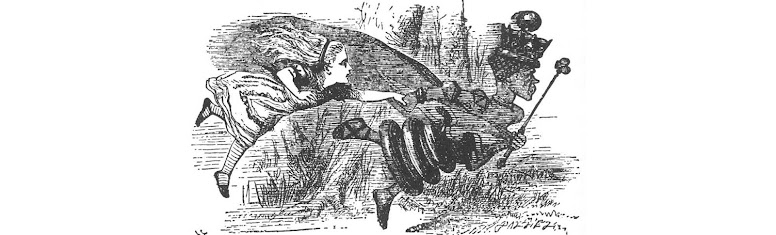
Wednesday, February 3, 2021

When will we learn not to name things after people?

Personally, I think that naming things after people is a bad idea. I also don't think we should glorify people by erecting statues of them, as if they were gods.

People are flawed. We all have good points and bad points. We've all done good things and bad things. And an action that I think is good, you might think is bad.

Who gets put on a pedestal, and why? Who gets taken off a pedestal, and why? Who decides?

Rather than arguing about whether to call a certain mathematics conjecture the Weil Conjecture, or the Taniyama-Weil Conjecture, or the Shimura-Taniyama Conjecture, or the Shimura-Taniyama-Weil Conjecture, why not call it the Modularity Conjecture? That's more informative. Or call it the conjecture (or theorem) that every elliptic curve over the rationals is modular. That's an efficient way to give precise and useful information.

If you can, come up with a pithy term that helps to convey what it does. My friends just laugh at me when I suggest that we call the Chinese Remainder Theorem the Leftover Things Theorem, but surely one can come up with a more informative name, rather than quarreling about the origin of the result. For example, "Unique Factorization Theorem" is a more helpful name than the "Fundamental Theorem of Arithmetic".

In an online discussion about possible names for some new streets in university housing, an Asian-American professor thought that there should be more streets with Asian names, and gave some suggestions, perhaps the most clever of which was to name a street Wang Wei. Others thought there should be more names of women. Someone noted a lack of streets named after Asian filmmakers and gave a few helpful suggestions, while another added an Asian lesbian. Someone was unhappy that an existing street was named after a man who had worked on uranium enrichment. There was a request for more pop stars. Some people pointed out that no streets in the neighborhood were named after Jews. Another was concerned about the lack of Polish, Czech, Austrian, Hungarian, Italian, and German names. An Armenian-American offered a list of famous Armenians. And another professor suggested the name of one of his relatives.

When someone suggested "Miles", someone else countered with Billie Holiday. The Miles backer argued that Holiday wasn't at the level of "Miles". This led to some pushback. It was then pointed out that Miles Davis's life had some significant problematic aspects, including violence towards women.

At one point, the person who had (half-jokingly) started it all, asked "couldn't we just have numbers?" That seemed quite sensible. Numbers or letters sound fine to me! (I grew up on a street in Queens whose name was a 3-digit number.)

It turned out that city rules had declared both numerical and alphabetical street names to be "unacceptable". In addition, street names were restricted to at most three syllables per word (though the neighborhood already had street names that violated that provision), and six syllables total, and had to be easy to pronounce and spell. Some neighbors pointed out that this produces a demographically narrow result.

In some places the streets are named after trees, flowers, or birds, in helpful alphabetical order. Isn't that lovely? Elm, Oak, and Pine are easy to spell and pronounce.

I never learned anything about Martin van Buren in school, even though my high school was named after him. It was only years later that I learned that he was considered to be one of the worst presidents. It would be fun to have a naming contest, to rename the school after something that isn't a person.

I was glad to see someone call (in a New York Times opinion piece) for her own late grandfather to be stripped of honors, due to his war crimes. She pointed out that a person can do both great things and terrible things during one lifetime, and it's important to "accept that two seemingly contradictory truths can coexist."

If we're going to name buildings and programs after donors (or the donors' favorite people), we could at least make it clear that it's not an endorsement of the donors' ethical values or approval of everything they have done, it's just a self-interested need for funding.

Why not name buildings or streets after higher principles, such as Truth, Beauty, Hope, Love, and Kindness?

For a university, I can imagine streets named Art, Chemistry, Dance, Engineering, History, Mathematics, and Philosophy. (We're treading on some risky turf, with those four-syllable words.) Or a mathematically-themed segment could have Algebra Avenue, Geometry Road, and Topology Path. Though I can well imagine math departments fighting over which areas of mathematics are important enough to be street names, how finely to subdivide the areas of mathematics, and whether more streets should be named after subfields of pure mathematics or applied mathematics.

Perhaps there's little we can fully agree on. But can we agree that naming things after people is problematic?

Wednesday, January 6, 2021

The Pendulum

(I wrote the below about a month ago, but it didn't seem worth posting. Today's events reminded me of it.)

About 20 years ago, an acquaintance from Germany, who had spent some time in Berkeley in the 1980s, told me some of her observations about the United States.

Something would happen, the media would report it, and everyone would get excited about it. Opinions were extreme, on both sides. First, it pulled one way, with the loudest voices aggressively asserting an alarming view. Then it pulled the other way, with public opinion loudly proclaiming disturbingly extreme views on the other side. It felt like a pendulum swinging wildly from one extreme to the other. She found it frightening and destabilizing. She was uncomfortable with such agressive expressions of strong, extreme views.

My acquaintance continued her story. She was relieved to observe that eventually the pendulum always settled down to a quite reasonable position in the middle. Americans fought it out, expressing all possible views, and eventually came up with a sensible resolution. After she learned that, she was no longer afraid of the rather messy process used to get there.

It seems to me that sometime since then, the pendulum forgot how to settle down. It's as if someone inserted a battery. Now, it only swings wildly. I feel sorry for the poor pendulum, which surely needs a rest.

I hope we can recover our ability to find sensible solutions to difficult problems, even when we don't completely get our own way. 

Friday, December 18, 2020

Diving off the blocks

When I applied to college, women weren't admitted to Harvard College. Girls who wanted a Harvard education had to apply to Radcliffe College. The ratio of Harvard students to Radcliffe students in the class of 1979 was set at 2 1/2 to 1, having been allowed to rise gradually from the 4 to 1 ratio of a few years earlier.

In my sophomore year, one of my roommates asked if I could swim. She had been talked into swimming intramurally for our dorm, Quincy House. The student who talked her into it, whom I'll call K, had been a competitive swimmer in high school. To swim intramurally, K needed to put together a team of four (for the relay), all affiliated with  Quincy House. She already had three: herself, my roommate, and the secretary to the House "Master". The latter two weren't serious swimmers and hadn't swum on a team. The Master's secretary wasn't a student, but the powers-that-be had declared her eligible, to help us get to four.

While I like to swim, I wouldn't say that I'm good at it. Not only had I not swum on my high school's team, but I hadn't even realized my high school had a swim team (it didn't have a pool).

K took me to the pool to try to teach me what I needed to know. I wasn't successful at learning the butterfly. I think we eventually decided I'd be the one to do the crawl. 

K told me I'd have to dive off the starting blocks. I climbed up on the block, looked down at the water, and said, "No way! I'm afraid of heights. I can't do this." K tried cajoling and berating me, but neither one got very far with me; I can be quite stubborn. She resigned herself to letting me dive from the pool's edge.

We probably didn't do very well at the swim meet, but we had fun. It was nice that Quincy House was represented at the women's swim meet.

Quincy was one of the largest Harvard Houses. If we could barely scrape together an intramural women's swim team, I wonder what the other Houses did.

In my senior year, I saw a call for female swimmers for intramurals, on a Quincy House bulletin board. In a fit of nostalgia I decided to take part, thinking that I'd be doing a good deed by helping them put together a team of four.

To my surprise, a ton of sophomores and juniors showed up. I asked around, and was told that these were mostly women who usually swam on the varsity team, but weren't on it that semester due to injuries or other reasons. I was embarrassed by how much slower I was than everyone else.

What changed between my sophomore and senior years? The year after mine was the first class with "gender-blind admission" (though the gender ratio took years to equalize, perhaps at least partly because Harvard continued to aggressively recruit from prep schools that were still heavily male). When the Harvard and Radcliffe admissions offices merged, it wasn't an equal merger. Essentially, the Radcliffe admissions office was devoured by the Harvard one. Radcliffe had admitted students almost purely on the basis of academic ability. Harvard College, and then the merged Harvard-Radcliffe admissions office, looked for a mixture of academic and athletic prowess. How heavily they weighed athletics hit home for me when I compared my tall, strong, athletic teammates during my senior year with the Radcliffe bookworms in the class of 1979 and earlier.

Sunday, December 13, 2020

Clueless?

 I was surprised by how many friends and colleagues were getting divorced in their fifties. The reasons all seemed the same. Here's a composite from real conversations, that captures the essence of many of them:

My first contact was with him:

Him: "I was taken completely by surprise. I thought our marriage was fine."

Later, I ran into her:

Her: "The marriage had been going downhill for a long time. For years I told him that things needed to change or I would leave. I told him what I couldn't put up with. He wouldn't listen. It was as though I were talking to a wall."

The next time I saw him:

Me: "You said you were completely surprised. But she says she's been telling you for years that there were problems, and that she would leave if things didn't change. Are you saying that's not true?"

Him: "No, it's true. But she never left, so I didn't believe her."

I'm reminded of this when I think about some of the reactions to women who point out things that are illegal or problematic. When the media paid a lot of attention to a story about sexual harassment by a Berkeley professor, someone worriedly told me, "But Alice, a lot of what he did were things many of us have been doing for years."

I wanted to say (and I should have said), "Yes, we've been telling you it's wrong and should stop, but you wouldn't listen."

I'm continually astonished by the willful cluelessness of those who say "If only you had said something sooner, we would have done something about it before it came to this!"

We did say something. Over and over. (Some of my own examples are in the stories I've been posting.) We tried every possible way to tell you.

We tried being polite.
We tried being direct.
We tried being subtle.
We tried being angry.
We tried being professional.
We tried pleading and crying.
We tried being funny.
We tried being witty.

They (you?) told us we were prudish, or uptight, or overreacting, or stupid, or nagging, or lying, or crazy. They (you?) were dismissive or angry.

Some of the "surprise" at this year's protests against racism and police brutality toward Blacks strikes me as a similar kind of cluelessness. They (you?) didn't realize that the U.S. has a long history of racism? They (you?) didn't notice the years of discrimination, segregation, police brutality, protests, riots, media reports, books, and other writings that came before?

Is such cluelessness innocent and harmless, or has it been part of the problem? And what should we do about it?

Monday, December 7, 2020

How I won a tennis trophy for losing a chess game


Only three ninth-graders showed up to compete at the chess meet for junior high school kids from Queens in 1972. There were lots of seventh- and eighth-graders.

The two ninth-grade boys played each other in the first round. The winner advanced to the second round, where he played me. Other kids gathered around to watch us play, and teased my opponent about how embarrassing it would be to lose to a girl. That wasn't fun for either of us.

I lost the game.

We had to wait while the seventh- and eighth-graders went for a few more rounds. Meanwhile, the judges declared me the second place winner for the ninth grade.

I was about to tell them that we needed to use the third round time period for a runoff between me and the loser of the first round, to decide who really deserved second place. Then I hesitated. Wasn't that the job of the loser of the first round (if not the judges themselves)? It dawned on me that he might not want to risk the humiliation of losing to a girl; he'd rather finish third, and tell his friends that the judges cheated him. I rationalized that if he was too dumb or egotistical to ask for a third round, it wasn't my job to help him. I said nothing, and I've felt terribly guilty about it to this day.

If I remember correctly, the awards ceremony (for various sports, not just chess) was some weeks later, in the evening. I had to walk up on stage so the judges could hand me a rather large trophy. They apologized for the fact that the statue on top was of a man swinging a tennis racket---they didn't have any chess trophies so they gave me a tennis trophy instead. I averted my eyes when I passed the boy who got the third-place trophy.

A few weeks later I received in the mail a little engraved gold plate stating that Alice Silverberg had won second place in Queens in ninth grade chess, with instructions on how to glue it to the trophy's base. My parents and I weren't able to pry the "first [or was it third?] place in tennis" plate off the base of the trophy, so we glued the chess plate on top of it.

When friends asked me why there was a tennis player atop my chess trophy, I told them the story of how I won a tennis trophy for losing a chess game---partly as a funny story, and partly to shame myself for my bad behavior.

When I was a kid, I enjoyed playing chess with my older brother's friends. At first they thought it was cute, and they were happy to be the older and wiser teacher. But as I got better and started to beat them, they enjoyed it less. They didn't like losing to a much younger girl, even if it was only on rare occasions. 

I quit chess in high school. It wasn't fun to play with boys who felt it was humiliating for a boy to lose to a girl, and who got annoyed with me if they lost.

(revised December 28, 2020)

Monday, November 30, 2020

Frozen Hair, and Toilets in the Dark

There were three ceiling lights in the women's room on my floor of the old Math building at the Ohio State University. When a light bulb burned out, it didn't get replaced. The room had no windows, so when all three light bulbs died, it was pitch black. How did the janitors clean the women's room in the dark? I imagined them wearing spelunkers' head lamps as they cleaned the toilets. I wondered why they never reported the burned out light bulbs to the maintenance department. I learned that was my job.

The hair dryers in the women's locker room at the gym had a worse problem. There weren't many of them, and at one point all were broken. The winters in Columbus, Ohio were cold enough to freeze my hair. I wondered whether frozen hair breaks like icicles. Fixing the hair dryers seemed like a worthwhile cause.

I reported the problem a few times, but nothing happened. I eventually phoned the maintenance department. The man at the other end told me that of course they couldn't send a man into the women's locker room to fix it. I asked why they couldn't send a woman. OSU didn't employ any women who could do maintenance. Couldn't they hire a woman? No, women weren't competent enough at fixing things. I pointed out that if this was a job that could only be done by a woman, then they should hire a woman to do it, and train her if necessary. He was unimpressed.

The eventual solution didn't involve hiring women in the maintenance department. My recollection is that it involved erecting plywood walls to form a long temporary corridor from the locker room entrance to the hair dryers, for the repairmen to walk down. I don't know how they built the corridor while maintaining privacy for the women in the locker room, but the rights of women might not have been their top priority.

Friday, October 30, 2020

How I learned about the John Birch Society

 Soon after I arrived at the Ohio State University, I taught linear algebra. The person assigned to be my mentor, whom I've elsewhere called Nick Machiavell, had taught the course a lot, so before the term started I asked him for advice. Nick advised me to give the final exam on the last day of class, rather than in exam period. He said the students prefer it. Since Nick was an experienced instructor for that course, and he was my mentor, I dutifully took his advice. I wouldn't have done it had I known it was against the rules.

Three of us who were teaching different sections of the same course at the same time arranged to give the same exam on the last day of class. I was the one who got in trouble for it.

The Vice Chair for teaching who hated me (see my tribute to John Hsia), called me into his office and berated me for scheduling the final exam on the last day of classes, rather than during finals period. If the Vice Chair had told me that a student had complained, I'd have been happy to find a solution that worked for the student. But the Vice Chair refused to tell me whether a student had complained, or he had simply found a syllabus on the floor and he wanted to give me a hard time about it. He brought in his sidekick, Joe Cool, the department bouncer whose job seemed to include intimidating women, so they could do a "good cop, bad cop" routine on me.

They accused me of scheduling the exam so that I could go on vacation during exam period. I told them it wasn't true and I would be in town working for the whole exam period.

When I pointed out that two of my colleagues were doing the same thing, and asked why they weren't treating my colleagues the same way they were treating me, they asked me for my colleagues' names. Their hostility, and the way they angrily badgered me to name names, smelled sufficiently like McCarthyism that as a matter of principle I refused to divulge the names. Perhaps I was over-reacting, but I didn't want to rat out my colleagues and get them in trouble.

The Vice Chair insisted that I give the exam in the final exam period. He didn't care that some students had already bought plane tickets to leave town before then. I thought this solution at that late date was unfair to the students, so I went to the department chair to ask for a better resolution. We weren't able to agree on a better one.

The Acting Dean seemed nice---we had bowled together at the welcome picnic for new faculty---so I thought he might be a reasonable person to turn to. I phoned his office to make an appointment. His secretary told me, "He can't see you on Tuesdays, since that's the day he has his John Birch Society meetings." This felt like an odd thing to say, since I hadn't asked to see him on a Tuesday.

After we hung up, I told the story to a colleague and asked him, "What's the John Birch Society?" He explained it to me. 

We couldn't figure out why the secretary had brought up the John Birch Society. Was she trying to tell me that the Acting Dean was not sympathetic to working women, and wouldn't rule in my favor?

The Acting Dean's advice was to label the exam on the last class day as a "midterm," and give a dummy exam in finals period, worth zero points. That would follow the letter of the law (while being a waste of time). I politely told him that I thought it was absurd. 

But at least he was trying to be helpful, unlike the Vice Chair. I don't remember what I did about the exam, but I do remember that the students, the Acting Dean, and the Department Chair thought that my solution was fair.

Nick, my "mentor", told me that my mistake was that I had followed the rules by announcing the exam date during the first week of class and listing it on the syllabus.

On the bright side, finding out about the John Birch Society turned out to be good preparation for living in Orange County, California, currently a hotbed of anti-mask pandemic activism.

Saturday, October 24, 2020

Princeton's Affirmative Action Plan

You can choose whether to read this story or listen to the podcast:

The course catalog for the Princeton graduate program in the early 1980s included a statement that read something like "Princeton University has filed an Affirmative Action Plan with the Department of Education. You can see the plan in the Office of the Provost." When I read this, my reaction was "Princeton has an Affirmative Action Plan? What could it possibly say?" From what I'd seen, it looked to me as if women weren't welcome at Princeton. The idea that Princeton actually had an affirmative action plan was surprising to me.

Unable to suppress my curiosity, I phoned the office of the Provost and asked to see the plan. The secretary who answered told me that the only place I could see it was in Firestone Library. I dutifully trotted over to Firestone Library. There was no Affirmative Action Plan in the card catalog, and the librarians didn't know what I was talking about. So I went back to my office to phone again. The secretary now claimed that the plan was in the library's basement. After several trips back and forth between Firestone Library and the phone in my office, I eventually found, hidden in the depths of some level of the basement, a few disorganized sheaves of striped computer paper (the kind with holes down the sides) that contained cryptic, undocumented raw data. Each sheaf was labeled something like "Number 9 of 25" but there were only a few such sheaves; most of the data was missing, and it certainly wasn't a "Plan".

I was getting increasingly frustrated, and the Provost's secretary was getting increasingly hostile. In one phone call she asked me for the names of my Department Chair and my PhD thesis advisor. She made it clear that it was not in my best interest to pursue this.

Well, they hadn't accounted for the fact that I was a Silverberg. We're very stubborn, even when that's not in our best interest. Trying to prevent me from seeing the Plan only made me more curious to find out what they were trying to hide, and I kept pressing. I hoped that my father, a newspaper reporter who had taught me about investigative journalism, would be proud.

I reminded the Provost's secretary of the wording from the graduate catalog, which made a promise to the Department of Education that anyone at all could see the Plan in the Office of the Provost. She told me that wasn't possible; there was none there for me to see. Surely the Provost had a copy of his own Plan. Could I please see that one? Finally, she relented, and said I could only see it that afternoon. Checking my watch and seeing that it was about 4:30 pm, I rushed over to the Provost's office.

The hostile secretary gave me a large tome. She wouldn't let me photocopy any of it or use the empty table, but she grudgingly let me sit in a chair. I balanced the tome on my knees. 

Around 4:45 pm, she told me I had to start packing up to leave. She wanted to close up early for the day. Rushing through the pages, I tried to absorb as much as I could of the gist of what Princeton called its Affirmative Action Plan.

Somewhere, I still have the handwritten notes I scribbled down. I'll blame the pandemic for why I can't find them. But here's what I recall from memory.

My recollection is that the "Plan" was written with the help of Princeton's Statistics Department, and had three parts. The first part analyzed the data that the university had collected on the gender and race of its students, using a standard statistical analysis method that they were expected to use for this purpose. The university did not fare well under this analysis.

I recalled the bureaucratic paperwork process at the beginning of each academic year. Grad students were given cards on which we had to check off things including our race and gender. I remembered that I once tried to leave the race and gender boxes blank. The person who took my paperwork looked at me, shuffled through the cards until she got to the gender and race card, saw the blank boxes, and checked off "female". Annoyed, I hung around to see what she did when other people handed in their paperwork. When white men handed in their paperwork, she didn't bother to look at their race or gender boxes to see if they were blank. I walked back up to her and asked her about it, but she just shrugged. It looked to me as if Princeton wanted to make sure it got credit for all its female and minority students (but didn't bother to get accurate figures on white male students). Even fudging the figures, Princeton had a hard time making the numbers look good.

So Princeton took it up a notch. Part two of the "plan" analyzed the same (suspect) data using a different statistical method. The results still didn't look good. (It wasn't possible to make that data look good.) But it looked better.

Part three was the tour de force. In part three, the Department of Statistics came up with a brand new way to analyze data, never before used, that it created just for this data. Much of that section was a sad attempt to explain why this was a legitimate thing to do. In the end, Princeton looked a little better using this brand new method created just for this data, though not much. It all seemed like a waste of the Stat Department's time.

What struck me wasn't the questionable behavior of the university administrators (something with which I had already grown familiar). It was that the Statistics Department was in cahoots with the university to "cook the books". I expected better.

Princeton did away with its Statistics Department in 1985, the year after I graduated. Curiously, a 2013 history of the short-lived department didn't know the cause of the department's untimely demise but speculated, "It seems likely that it died of `natural causes.'" I don't really think it was killed off to cover up the department's involvement in that shameful report, though I did feel that it was a suitable punishment for its complicity.

Monday, October 12, 2020

Princeton University's Escort Service

In other stories, I've alluded to the day (April 5, 1983, to be precise) when the Princeton University Math Department's external advisory committee gave grad students an opportunity to meet them in a group. I've mentioned that the committee ignored my serious concerns, but got enthusiastic about my joke list. 

What were the more serious concerns that I told them about? Here's one.

Some of the backstory is well told in a New York Times article that appeared on November 29, 1981
(http://www.nytimes.com/1981/11/29/nyregion/princeton-uneasy-in-wake-of-rapes.html) under the headline "Princeton uneasy in wake of rapes". Highlights include:

Since the beginning of the fall semester in early September, two teen-agers and a Princeton graduate student have been raped within a mile of the campus.

Prospect Avenue, the tree-lined home of the upper-class eating clubs, was the scene of two of the assaults - the rape of the graduate student on Oct. 22 and the attempted rape of a Princeton faculty member on Oct. 14.

The graduate student was riding her bicycle along Prospect Avenue shortly after midnight when she was struck by a car, knocking her to the ground. The driver stopped and offered to take her to a hospital, but then forced her into his car at knifepoint, bound her with electrical tape, drove her to a nearby field and raped her.

The article goes on to state that a student proposed that the university create a shuttle bus service.

"We're doing all in our power to make the Princeton campus as safe as it can be," said Alfred Terry, assistant director of security. Others are not so sure. "The university has been dragging its feet about putting locks that work on the women's bathrooms, installing emergency phones and changing the esthetic lighting to effective lighting," said Kathryn Carver, a senior and member of the student-initiated Rape Task Force.
"It's a shame that the university only gets responsive when the body count gets high enough," Miss Carver said.

Two pages later, the New York Times carried a long piece about sexual harassment that didn't show Princeton in a good light (https://www.nytimes.com/1981/11/29/nyregion/handling-sexual-harassment.html) and gave the impression that Princeton cared more about its image than its students.

Princeton hated the adverse publicity. At first, I took the University at its word that it wanted to make the campus safer. But everything it did seemed to show that it did indeed care more about its image than its students. Below are some of my attempts to hold Princeton accountable.

The university did indeed create a shuttle bus service. The nearest stop to the math department was on the street near the front entrance to Jadwin Hall, which faced the football stadium. When it rained, the bus was full (of male students) so the driver wouldn't let me on and I had to walk home. More worrisome were that one never knew how long one would have to wait on the street in the dark, and the courtyard I had to walk across to get from Fine Hall to Jadwin Hall was unlit. My complaints about this led to the following:

Friday, October 9, 2020

The jig is up

 I've been waiting to tell stories about my Princeton experiences until I wasn't angry about them, and could write with compassion and understanding, or at least with humor. I'm afraid that's not likely to happen anytime soon (despite my best efforts at a Buddhist monastery). But perhaps my Princeton stories, such as the one below, will help to explain some of my later decisions.

I was admitted to Princeton with a graduate fellowship from the university, which Princeton took away after I was awarded an NSF Graduate Fellowship. Like several mathematics students in the years ahead of me, I planned to use my NSF Graduate Fellowship to spend a year studying in England at the University of Cambridge, deferring my arrival in Princeton for a year. Princeton insisted that I funnel the NSF fellowship through them, since Cambridge tuition was less than the fellowship stipend, and Princeton planned to pocket the difference.

However, in my year, Cambridge significantly raised tuition on foreign students. When I forwarded Cambridge's bill to Princeton, Princeton balked. They didn't want to pay, since they wanted more of a cut. This went back and forth by snail mail throughout the year. During that time, the exchange rate turned against me, by a significant amount. What Princeton finally paid was less than Cambridge's bill. I argued it for years with both Princeton and Cambridge.

When I was a Harvard-Radcliffe undergrad, an advising office told students to always take advantage of our rights, by requesting and obtaining our records. You never know what information you'll find, and information is power. 

Sometime during my argument with Princeton about the debt to Cambridge, I asked to see my file in the Dean's office. The staff were reluctant to show it to me, but they eventually gave in. I wasn't allowed to photocopy anything, but I was permitted to take notes by hand, while balancing the file on my knees. A note from the math department Chair to the Dean about the Cambridge debt included the line "The jig is up." It pointed out that I was on to them, about their attempt to hold onto funds that they should have forwarded to Cambridge.

Even with this smoking gun, Princeton refused to pay the remaining balance.

Eventually I got tired of being in Cambridge's bad books, and I paid the debt myself.

Friday, September 4, 2020

The Playboy

The Playboy was in his 70s. I knew he was a playboy because he told me so. He boasted that he had never dated anyone older than 25 until he met his wife, whom he had met and married about 7 years earlier. He claimed she was 10 years younger than he was.

We were flying across the country, seated next to each other on a plane. I was on my way to a funeral. I flew first class since the airlines were no longer doing bereavement fares, and first class was the only thing available at short notice on frequent flyer miles.

The Playboy's father was a self-made man who built his company from scratch, and the Playboy inherited his wealth and the company. A mini-Trump. The Playboy knew he would never have to work a day in this life. From the beginning, he decided that the only thing he needed to know was how to talk to women (and get them to sleep with him). In college he attended no classes, and jumped around from one college to the next, flunking out of each one.

On his second cell phone (the one he keeps secret from his wife, which serves as his "little black book") he showed me photos of some of his girlfriends, including the one he was going to meet at Legal Sea Foods in Boston on Friday night, for dinner followed by sex at his hotel.

I made a derisive remark about how his young girlfriends were basically prostitutes who were giving him sex for money and presents. He chastised me for being so judgmental. They were nice, ordinary young women, he insisted. One was a schoolteacher. Everyone was having fun and getting something out of it. Nothing wrong with it.

The flight attendant overheard more than she wanted of our conversation. She glared at us disapprovingly.

The Playboy proudly boasted that he had never read a book in his life, and didn't intend to. He hastened to add that he knew how to read---he read contracts for the business.

I told him the story of Fermat's Last Theorem and explained the mathematical statement. I had managed to explain it to two young Japanese children with whom I didn't share a common language, so I knew I could explain it to him. Mathematics is a universal language. I told him the story of 1729, Hardy, Ramanujan, and the taxi cab, and showed him the 2 ways to write 1729 as a sum of 2 cubes. His trip included a planned reunion with his high school buddies. He said they would never believe that he spent the whole flight having a great conversation with a math professor, that he got a math lesson, and that he enjoyed it. He was looking forward to telling them all about it.

He was, in fact, quite charming.

The Playboy spoke fondly of his wife and seemed to love her. However, when he was on the road she phoned him every night to make sure he wasn't running around behind her back. He was furious that she didn't trust him. I reminded him that she was right not to trust him. He was convinced that she had no idea about his liaisons, and it was terribly unfair that she doubted him.

As an afterthought, he decided that it wasn't a problem that he told me about his girlfriends, since I didn't know his name. I didn't point out that during our conversation he had dropped his first name twice and his last name once, and his name was partly visible on the boarding pass in his seat pocket.

I knew I had to convince him to read a book. What to pick? It would have to be short and sweet, and at a child's level. Enticing and easy to read. But I also wanted something that would teach him a lesson. Even better if it were profoundly disturbing. I told him that as his teacher, I was giving him one assignment. It was to read "The Little Prince". I assured him that it was short and had lovely pictures.

A little sleuthing online afterwards not only gave me his wife's phone number, but also revealed that his wife was his age, not 10 years younger. I wonder whether she lied to him, or he lied to me. Could she have fooled him for that long? 

I fleetingly considered contacting the wife to let her know about the rendezvous at Legal Sea Foods on Friday, as a show of female solidarity, but I decided that would not be helpful (plus, the Playboy had enough resources to retaliate against me). 

I didn't contact the Playboy either, but it would be nice to know whether he did his homework and read "The Little Prince".

Saturday, August 29, 2020

"Now I understand why it's trivial"

I first heard about R in the Princeton math department Common Room, when the head of the graduate admissions committee told a group of us about the students who applied that year. He said that R's application was amazing, with glowing, over-the-top letters of recommendation.

R was incredibly clever. So clever, that whenever I told him about a theorem I had proved, he immediately informed me that my result was trivial and the proof was obvious.

After R became a professor, he invited me to give a seminar talk at his university. I wondered why he had invited me, if he thought that everything I did was trivial. I decided to use the talk as an opportunity to prove to R that I could do something that wasn't obvious. So I chose to talk about a problem a co-author and I had solved where the answer was unexpected. The proof wasn't hard, but it wasn't obvious; it was a little tricky.

During my talk I asked the mathematical question, and before I gave our answer I polled the audience as to their guesses for the answer. The question was whether a certain set associated to an elliptic curve is always infinite, always finite, or whether it depends on the curve, and in that case, with what distribution? Everyone except R ventured a guess. I prodded R to commit to an answer. I wasn't going to let him off the hook. He said he had no idea. When I (rather unfairly) pressed him further, he gave a wrong guess.

At the dinner after the talk, I explained to R that I had noticed that R invariably told me my work was trivial and obvious, and that my talk was a set-up designed to prove to him that not everything I did was trivial.

R told his side of the story, which was that once he understood a proof, even one he had come up with himself, it seemed to him as if it should have always been obvious, and anyone (including himself) to whom it wasn't obvious was just being stupid. 

At the end of the dinner, R turned to me and in all seriousness remarked "Now I understand why it's trivial." I burst out laughing. R had thought about the result during the dinner, and now believed it was trivial. I wish I had asked him to elaborate, since he might have found a more conceptual proof, and I would have learned something from it.

While I had always liked R, despite his snap judgments of my work, my feelings towards him got much warmer due to a conversation we had after I moved to Orange County, California. I ran into him at the annual math meeting, and complained about my difficulty adjusting to the SoCal culture. I told him how I had been part of several small social groups for years, and yet some of the people didn't know my name, and the ones who did usually didn't care enough to even say "I noticed you haven't been coming here for the past year. We missed you. I hope everything was OK." They didn't seem to care whether I was alive or dead. In a very heartfelt way, R told me, "If you died, I would care, and it would make me very sad." It was a sweet thing to say, and reminded me that mathematicians, for all our flaws, are a community of people who care about each other.

Tuesday, August 18, 2020

The Threat

I was seated next to the university President at dinner, when I visited a large state university. A Dean sat across from us. The President and Dean were talking about people and university politics that I and others at the table weren't familiar with. The rest of us sat quietly, and felt left out. Trying to transform the conversation into something of interest to all of us, I began to ask questions.

The President and Dean were heatedly regaling us with the crimes of a Professor who represented the faculty union. The President claimed that the Professor had threatened her, and that his behavior was unreasonable, unethical, and illegal. I asked for details.

The threat was that if the university didn't do something that the union wanted, he would tell the faculty about it.

That was the "threat"? The President explained that by threatening to tell the faculty that she wasn't meeting his demands, the Professor was threatening her. She took it personally, and she was outraged.

I told the President that if I were her, I would be glad to know what would happen if I didn't do what the union wanted. To me, it didn't seem like a dangerous threat, it seemed like useful information that could inform her decision. He was simply pointing out what leverage he had. I thought she should be grateful to him, rather than angry.

But the President had become so invested in demonizing the Professor, that she wasn't willing to try to see things any other way.

Saturday, August 15, 2020

A Tribute to John Hsia

My Ohio State University colleague John Hsia recently passed away. John was very kind to me. He was generous and nice.

Here's one example of his generosity and kindness. When I arrived at OSU, one of the Vice Chairs assigned me a horrid interior office with a connecting hole to the men's room (see the November 5, 2018 story). After I put up with it for most of an academic year, near the beginning of spring quarter John presented me with a key. Our colleague Joe Neisendorfer was taking a new job at the University of Rochester, to start in the fall. Joe wasn't teaching in the spring quarter, and had moved out of his office early. John suspected that I would stay in my vent-for-the-men's-room office forever, if we left it up to the Vice Chair (who seemed to relish demonstrating his power over me---stories for another day). John took pity on me, and asked Joe to give him his office key, so that John could give it to me. Joe kindly agreed, and I moved into his office before the Vice Chair could assign it to anyone else. The Vice Chair hated me for it, since we had gone around him. But it was worth it to get a room with a view (and no men's room fumes).

If only there were more people like John Hsia.

Monday, June 15, 2020

Leveling the playing field?

For years, the National Science Foundation (NSF) has been sending grant proposals out for peer review. In addition to writing an evaluation, reviewers rate the proposals “Excellent”, “Very Good”, “Good”, “Fair”, or “Poor”. Proposals need very high ratings to get funded.

X was usually a great guy, and I had a high opinion of him. So I was surprised when he told me that when he reviews proposals written by women, he gives them lower ratings than if the same proposals had been written by men. He told me that he assumed that NSF gave preference to proposals from women. By downgrading them, he believed he was leveling the playing field.

I don't know whether NSF was really giving preference to women in the 1980s or 1990s when we had that conversation, or whether it does now. But no one ever told me that they downgraded proposals by men to level the playing field in the 1960s or 1970s or earlier, when discrimination against women in reviews and elsewhere was blatant.

Tuesday, April 28, 2020

Mathematicians for Equal Opportunity

This article has now appeared in "Fifty Years of Women in Mathematics", Association for Women in Mathematics Series 28 (2022), Springer, 49-53

Princeton’s AWM Newsletter wars

I first started reading Newsletters of the Association for Women in Mathematics in Harvard’s Cabot science library when I was an undergraduate in the late 1970s. I wasn’t an AWM member, so I read the library’s copy of the Newsletter. Harvard’s history of sexism and discrimination (see for example my 2006 AWM Newsletter article Women at Harvard: Remarks at the AWM Panel “Lawrence Summers: One Year Later”) was blatant and persistent (in fact, though I attended Harvard, I wasn’t admitted to Harvard College, which only admitted men; women applied to Radcliffe College, which had a complicated and evolving relationship with Harvard), so the subjects covered in the AWM Newsletter, and the AWM’s efforts to end discrimination and counteract prejudice, struck a chord with me.

When I was a grad student at Princeton in the early 1980s, the sexism and discrimination were worse and the formal barriers to women were more recent and more extreme, compared to Harvard’s (see for example Nancy Weiss Malkiel's 2016 book “Keep the Damned Women Out”: The Struggle for Coeducation). Since the rent that Princeton charged me for graduate student housing was greater than the income from my graduate fellowship, I decided that I couldn’t afford the AWM dues ($5/year for students, back then) that would have given me a free subscription to the Newsletter.

I got the bright idea: “Harvard’s science library got the AWM Newsletter. Surely Princeton’s could too. That way, everyone can read it.”

I went to Princeton’s math/physics librarian with my plan. He was furious. “The AWM is a union!” he exclaimed. He told me that subscribing to the Newsletter would support a union, so he wasn’t going to do that.

Taken aback, I pointed out that his library received the Notices of the American Mathematical Society and all the AMS journals, and I argued that the AWM was no more a union than was the AMS. Perhaps overreaching (hey, I’m from Queens), I claimed that the AMS at the time was a union for men, in that speaker invitations, committee memberships, prizes, etc. favored men, so it was only fair to also subscribe to the AWM Newsletter. And the AWM Newsletter is much cheaper. I might have pointed out that it’s “for” and not “of” in “Association for Women in Mathematics”, and anyone can join. My arguments probably increased his anger. He was unswayed.

Not giving up, I next went to the department Chair with the suggestion that the math department get an institutional membership in the AWM and contribute its complimentary Newsletters to the library. Some months later I saw him in the hallway and asked for an update. He told me that the faculty had decided against it, on the grounds that the department didn’t want or need it, and it was too expensive. 

In my last year at Princeton, a “visiting committee” of mathematicians came to the math department to gather information and advise the department. The department had to give grad students an opportunity to sign up to meet with the committee. (Afterwards, I learned that the chair sent some grad students to the meeting to report back to him on who complained.) Among my suggestions for improvement, I asked that the library or department get the AWM Newsletter, so that everyone would have access to it. When they said I should ask the department, I told them I already had, and explained why the request was denied. When they asked how much an institutional membership costs, I replied “$25 a year.” They laughed at the low price, and several of them spontaneously and flamboyantly opened their wallets and threw bills on the table, in a symbolic gesture. But they soon picked up their money and placed it back in their wallets.

I learned later that the Princeton library received the AMS Notices and Transactions not through a library subscription, but by piggybacking off the individual member subscription of a professor who gave his complimentary copies to the library (a practice frowned on by the AMS). Someone on the faculty was an AWM member and there was some talk of his giving his Newsletters to the library, but I don’t think it happened, and I can’t imagine that the librarian would have accepted it.

Encouraging fairness, transparency, professional behavior, and accountability

Sometime in the 1990s a colleague told me that she decided not to nominate me for a position in the AWM leadership, because I didn’t support some of what the AWM does. Indeed, while I am very supportive of the AWM’s mission to promote equal opportunity, I have qualms about AWM programs that are restricted to or favor women or girls.

When I recently was made an AWM Fellow, I came across the citation for me on the Internet. It began “For her outstanding research in number theory and deep commitment to the promotion of women in mathematics . . .” My immediate thought was “But that’s not accurate and I don’t want it on the website!” I asked for “deep commitment to the promotion of women in mathematics” to be replaced with “deep commitment to the promotion of fairness and equal opportunity”. Everyone graciously agreed to change it.

The explanation I gave for my request was: 
“I very strongly believe in and I have devoted much of my attention towards the AWM mission ‘to promote equal opportunity’. I have always had qualms about ‘the promotion of women and girls in mathematics’, and I have qualms about many women-only initiatives, since I don’t believe that 2 wrongs make a right, and I don’t believe in ‘separate but equal’. I’m also concerned that such initiatives will hurt women in the long run.”

I would like professional organizations and communities to be more welcoming and inclusive, not less so. And does the AWM really want to be in the business of deciding who is female and who isn’t? The AWM’s programs and prizes that are restricted to or favor women or girls seem incompatible with the AWM’s commitment to equal opportunity and equal treatment, and incompatible with the AWM’s Statement of Welcoming Environment, announced in 2013, which says in particular “the AWM is committed to the promotion of equality of opportunity and treatment for all AWM members and participants in AWM-sponsored events, regardless of gender, gender identity or expression, ... or any other reason not related to scientific merit.”

How does favoring women hurt women? It breeds resentment that will eventually backfire against women, and it devalues women. It reinforces the pernicious stereotype that women are intellectually inferior, and can’t achieve at the same level as men without extra help.

Especially problematic is when one favors one’s own group. Favoring people who remind us of ourselves has been part of the problem. It’s something that the AWM in its early days fought against. I think that all of us should be wary of promoting policies or advocating for programs that favor our own group, or that disproportionately favor ourselves.

One justification for programs that are restricted to or favor women is that such initiatives will help women achieve a “critical mass” of at least 30% of the community, which will enable women to have a voice. However, there will always be groups that (unlike women) are only a small minority of the population as a whole. Shouldn’t we learn how to treat everyone fairly, even when they belong to a group that is too small a percentage of the general population to expect to achieve a critical mass? Small groups are at a disadvantage when larger groups get favored for whatever reason.

I strongly believe in fairness. I support efforts to eliminate discrimination and artificial barriers, to make people aware of unconscious (and conscious) bias and help them counteract it, and to hold people accountable. When I give (wanted or unwanted) advice to people in positions of power, I sometimes say: 
  • Many problems could be avoided if people simply behaved professionally.   (We like to think that our colleagues are our friends. But we have a professional relationship with our coworkers, and we have an obligation to behave professionally. Sometimes, all it takes  for people to improve their behavior is to ask themselves “Is this professional? Is this ethical? Is this legal?”) 
  • Train faculty in best practices for hiring, promotion, admission of students, and teaching.   (My university has “best practices” for hiring, but there are faculty, hiring committees, and department chairs who aren’t aware of them.) 
  • Put in place good practices, policies, and rules, and hold people accountable when they violate them.   (People need to have good options for how to get problems fixed. And they need convincing evidence that if they report a problem, things will get better rather than worse.) 
  • Make the rules of the game clear, don’t change the rules in the middle of the game, and ensure that we all have an equal opportunity to play the game and win (whether the game is a promotion, position, prize, grant, or other professional reward).   (There is often an “inner circle” with access to information that the rest of us don’t have. The people in the inner circle know the rules, and know which rules and deadlines they can break and get away with. That gives them an unfair advantage. I’ve often seen this with hiring, when the public criteria given in the job ad are quite different from the secret criteria, or the real criteria for the job. People in the right circles know the real criteria and have an advantage.)
The AWM and other organizations play an important role in helping the mathematical community achieve these goals. I would like such efforts to continue and to increase.

By the way, despite my friend’s concerns about my compatibility with the AWM, in 2005 the AWM Nominating Committee informed me that I was “enthusiastically suggested as a candidate for the AWM Executive Committee”. I ran in the election, with the following statement:
“I believe that the reason I was asked to run for the Executive Committee of the AWM is my strong interest in working towards equal opportunity.  We can work to accomplish this by increasing fairness and openness in our profession. We are not there yet, and have a long way to go. I believe that making information widely accessible will help the mathematics and academic communities move away from the traditional old boy network way of operating. I hope that the AWM will play a supportive role in helping the people in our communities learn to behave professionally, fairly, and legally. I would like to see the AWM become a helpful resource for departments and universities that would like to change the way they do business so as to insure that (1) the best people are selected, and women and minorities are not overlooked, and (2) all of their members are treated fairly, supportively, and with respect.”

I was elected, and served. The AWM has been welcoming to diverse viewpoints, and I hope it stays that way!

Mathematicians for Inclusion

The 50th anniversary of the AWM might be an appropriate time to think deeply about the AWM’s purpose and goals, and revisit its programs, and perhaps even its name, as it moves into its next phase.

With the proliferation of gender identities, I wonder whether “women” is still a useful label for a professional organization, and whether a more inclusive title should be considered. Should the name “Association for Women in Mathematics” eventually be replaced with “Mathematicians for Equal Opportunity”? Or “Mathematicians for Inclusion”?

I would prefer that the AWM be about fairness and justice, not about being for one group. Is the AWM a union, or a social club, or a professional society? Was the Princeton librarian right? 

I’m not objecting to freedom of association. I thought that Harvard was wrong to punish students for joining single-gender clubs (sororities, fraternities, etc.) that were not officially affiliated with the university. But I don’t think that government funding should go towards discriminatory practices, and I would like the universities, communities, and organizations that I’m a part of to be welcoming.

Rather than making decisions based on who our friends are, or on who reminds us of ourselves, or on quotas, let’s figure out what we’re trying to achieve, and what will get us there.