After our run-in with Basil Fawlty, K and I met up with K's parents in Zermatt. After Zermatt, we would need to kill time before I flew back to the U.S. and K gave a plenary lecture at a math conference in Germany in late September.
A friend had advised us to go to the Lötschental, a secluded valley in the Swiss Alps. From a list of holiday homes to rent, I found one that looked appealing and in my price range. It was at the end of the valley, in Fafleralp.
I phoned the chalet's owner from the Zermatt hotel. She didn't speak English, and spoke to me in what I presume was a Lötschental dialect of Schwiizerdütsch. I spoke to her in rudimentary Hoch Deutsch.
Given how primitive my friend had said the Lötschental was, the one thing I wanted to verify was that the chalet had electricity, so that K could use his laptop to prepare slides for his upcoming lecture.
I asked the owner whether the chalet had Strom (electricity). She paused, and then gave what seemed like an overly complicated answer. I continued to press her. Why was she being evasive? It seemed like a simple yes-or-no question. The holiday home either had electricity, or it didn't. When pressed for a yes or no answer, she eventually said yes.
We left Zermatt by train, and arrived in Fafleralp on a slow bus that stopped to pick up tiny grizzled women, each carrying a pail of milk from her cow to drop off at the dairy. Finally, we arrived at the end of the line.
The owner was technically correct that the chalet had electricity. The place was lit with electric light bulbs, but they were powered by a 12-volt car battery that sat in the kitchen!
Fafleralp seemed like a cross between "Heidi" and "Brigadoon". Each morning a little old woman climbed the steep grassy hill to milk her cow, carrying the pail on her back. She was bent in half at a 90 degree angle, perhaps from a lifetime of battling the strong winds, and didn't seem able to straighten up.
K prepared his slides until his laptop's battery ran out. We decided to see if we could "borrow" electricity from the very modern-looking chapel. We never found a light switch, and didn't have flashlights since we didn't have cell phones in 1994, but I found an outlet by crawling around and feeling for it.
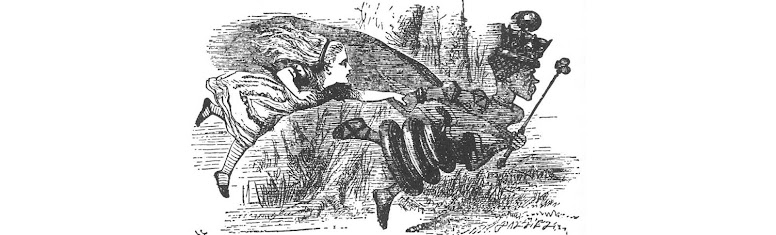
We took some lovely walks. One day we walked down the river, exploring the valley's villages. We arrived at a church where some event was taking place. Channeling Alice in Wonderland, we wandered in and sat in a pew.
There was a display of fancily braided bread at the front of the church, with a banner that told us, in French, that this was the graduation ceremony from the national confederation of French breadmakers, for some high level of bakers of fancy French breads. We imagined it was something like a Masters degree or PhD in bread baking. We learned that the ceremony rotated through towns and villages in France and Switzerland that came under the jurisdiction of this school of bakers.
Speeches were given by dignitaries, and the (adult) students received their degrees. Every so often, the members of a brass band, who sat in a back corner of the church, would stand up ostentatiously. The band had a diverse collection of musicians of all ages. The conductor raised his baton, and the audience went silent in anticipation. The band then played a four-note fanfare. Silence, and more anticipation. But the musicians always just sat down. K and I kept waiting for them to play more, but they never did. Why did they need a big brass band to play four notes?
This seemed so ridiculous, that we had trouble suppressing our laughter. We didn't understand why the rest of the audience wasn't rolling on the floor in hysterics, until we realized that we were probably the only people there who weren't dignitaries, family members of the students, or part of the extensive lighting and camera crew.
That crew seemed to consist of people from all over Europe, shouting to each other in Italian, French, Swiss, German, and English, among other languages, during the breaks.
At the end, I grabbed a lighting person and asked him who the blond female dignitary was who gave the keynote speech. She had alluded to being English, though she spoke in what sounded to me like perfect French.
He replied, "the spiritual leader of the Muslim world."
Looking confused, I asked again. He mumbled something about the Aga Khan. When I next had access to the Internet, I decided that she was Begum Salimah Aga Khan (née Sarah Frances Croker Poole), the (soon-to-be ex-) wife of the Aga Khan.
I wanted to attend the reception afterwards and introduce myself to this "spiritual leader of the Muslim world". I thought that would be great fun, and pressured K to join me, but K was too much of a wimp to do it, so I didn't either. (K suggested that I include this info, with this wording. He now regrets that he wasn't more adventurous.)
Sometime during our stay in the Lötschental, someone told us that the bus that would take us out of Fafleralp stops running when it starts snowing, and bus service doesn't start again until everything thaws in the spring. And it can snow in September.
We packed up on the evening of September 15, ready to take a bus the next day. When we awoke, heavy flakes of snow were falling, and staying on the ground. As the snow built up on the ground and the trees, making for a lovely scene, we wondered whether we'd missed our chance and would be stuck there until spring, unable to contact our department chair to explain why we couldn't teach our courses.
The bus did show up, and we made our way out of the valley, with mixed feelings about having to return home.
Fafleralp became inaccessible starting in May of 2025 due to a rockfall and glacier collapse that buried the village of Blatten and cut off access to the end of the valley, though it looks as if Hotel Fafleralp reopened for the 2026 summer season.